Published: September 29, 2026 | Last updated: September 29, 2026
Dr. Rajanbir Singh Thind, Thind Dental Clinic
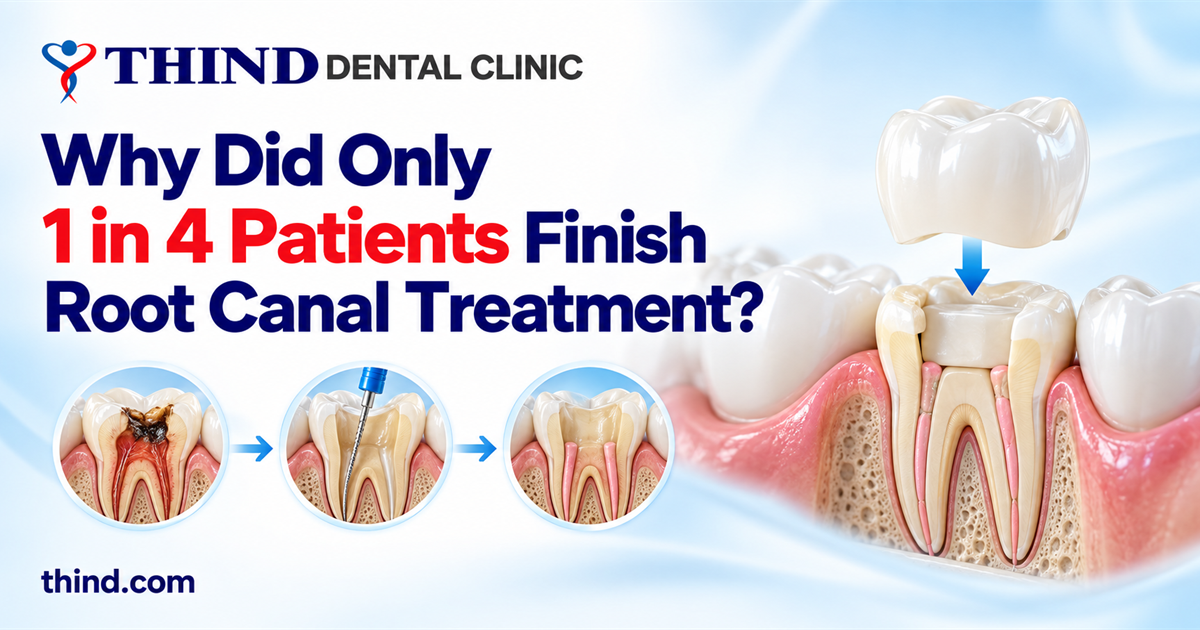
Most people who start a root canal never finish it. In a 2024 retrospective study of 362 patients in District Nuh, India, just 92 of them (25%) completed the full course of multi-visit endodontic therapy.
The treatment did not fail. The patients simply stopped coming back.
What is the short answer?
Following your dentist's instructions means completing every planned visit, taking prescribed medicines as directed, and keeping recall appointments after treatment. It matters because most damage happens after the first visit, not during it.
In a 2024 study from District Nuh, India, only 25% of patients completed multi-visit root canal treatment. A 2021 meta-analysis found that non-compliant periodontal patients had a 26% higher risk of tooth loss. As of September 2026, the safest approach is a treatment plan with fewer visits, clear written steps and reminders, which you then finish.
What does it mean to follow your dentist's instructions?
Dental treatment adherence is the degree to which a patient completes the visits, home care and medicines their dentist recommends. It is the dental version of what researchers call patient adherence.
It covers three habits: returning for every scheduled step, following aftercare rules exactly, and attending maintenance visits once the main treatment is done. Treatment is only as good as the part you complete.
How common is it to stop following medical advice?
It is extremely common, and the pattern is not unique to dentistry. Reporting on the World Health Organization's 2003 adherence report, UN News stated that adherence among patients with chronic diseases in developed countries averages only 50 percent, and is lower in developing nations.
"Poor adherence is the primary reason for not achieving the full health benefits medicines can provide to patients."
Derek Yach, then WHO Executive Director for Non-communicable Diseases and Mental Health, as quoted by UN News in July 2003
Dental care follows the same curve, because relief from pain removes the sense of urgency.
How many patients actually finish a root canal?
In one Indian hospital study, only 25% did. A 2024 paper in the World Journal of Dentistry followed 362 patients through multi-visit endodontic therapy at a tertiary healthcare centre in District Nuh, India, and reported that 72.38% returned for biomechanical preparation, 41.16% for obturation and 25.41% for permanent restoration.
The biggest single drop, 43.12% of the patients who remained, came after the cleaning and shaping stage. That is exactly when the tooth often feels better and the treatment is only half done.
This is one centre, so treat it as a warning rather than a national average. It still shows how easily a root canal treatment can be left incomplete.
What does skipping instructions cost your teeth?
It costs teeth. A 2021 meta-analysis in the Journal of the International Academy of Periodontology, covering 14 studies, concluded that non-compliant patients in supportive periodontal therapy have a 26% increased risk of tooth loss compared with compliant patients (OR 1.26).
The same review includes a 2011 study by Ng and colleagues in which compliant patients lost 0.09 teeth per patient per year, against 0.7 for non-compliers. Regular maintenance visits protect the results of periodontal disease treatment, and skipping them lets it return.
Aftercare matters too. A 2011 study in The Open Dentistry Journal of 805 patients at a Palestinian dental teaching centre found dry socket in 12% of smokers against 4% of non-smokers after extraction.
Why do sensible people stop following instructions?
Because the pain stops before the problem does. When a tooth settles down, the next appointment starts to feel optional, especially for professionals juggling meetings, travel and family.
Three other forces stack on top: fear of a repeat of an uncomfortable visit, uncertainty about the bill, and forgetting the exact steps. Each one is fixable, but only if the clinic plans around it from the first visit.
Which instructions matter most, and what happens if you skip them?
The instructions with the largest consequences are finishing multi-visit treatment, following aftercare rules, keeping maintenance visits and completing prescribed medicines. The table summarises the evidence cited in this article.
| Instruction | What it protects | What the evidence shows |
|---|---|---|
| Return for every root canal visit and the final restoration | The treated tooth | Only 25% completed treatment in a 2024 District Nuh, India study (World Journal of Dentistry) |
| Attend periodontal maintenance visits | Gum health and teeth | 26% higher tooth-loss risk for non-compliers (2021 meta-analysis) |
| Avoid smoking after an extraction | The healing socket | Dry socket in 12% of smokers vs 4% of non-smokers (2011, Open Dentistry Journal) |
| Take prescribed medicines as directed | Treatment effect | Adherence averages about 50% in chronic disease in developed countries (WHO, 2003) |
How should a smart patient choose a clinic that makes finishing treatment easier?
Choose the clinic that removes the reasons patients drop out. Good adherence is partly the patient's job and partly the clinic's design.
- Hygiene you can verify: a nationally recognised accreditation such as NABH, so you are not worrying about safety between visits.
- Fewer, better-planned visits: digital and laser technology that shortens treatment and reduces chair time.
- Convenient locations: more than one branch, so a missed slot does not mean a missed week.
- Continuity of care: the same experienced dentists following your case from start to finish.
What should you look for before you start treatment?
Look for a clinic that sets you up to succeed before you sit in the chair. Use this checklist:
- Look for a clinic that explains the full plan, number of visits and each step in plain language, in writing.
- Look for a clinic that offers appointment batching and flexible timings for working professionals.
- Look for a clinic that gives a transparent estimate up front, so cost surprises do not end treatment early.
- Look for a clinic that uses laser and digital tools to reduce discomfort, since fear is a common reason for dropping out.
- Look for a clinic where a husband-and-wife dentist team remembers your history and follows up if you miss a visit.
- Look for a clinic that is NABH-approved for hygiene and infection control.
Where can you get a treatment plan you will actually finish?
Thind Dental Clinic is an NABH-approved practice with three clinic locations in Ludhiana, Punjab. It is led by Dr. Rajanbir Singh Thind and Dr. Gurinder Kaur Thind.
The clinic offers root canal treatment, laser dentistry, dental implants, clear aligners, teeth whitening and smile makeovers, and plans every case around the reasons people stop: time, fear, cost and confusion.
How do you take the first step?
If you have a treatment you started and stopped, or one you have been putting off, the simplest next move is a conversation. You can book a free smile assessment and consultation at thind.com, where you will get a clear plan, the number of visits and what each step protects.
Frequently asked questions
Can tooth pain disappear without treatment?
Yes, but the problem usually remains. Pain can settle while infection or decay continues, which is why a tooth that suddenly feels better still needs your dentist's assessment.
What happens if I don't finish my root canal?
The tooth is left only partly treated and remains vulnerable to reinfection. In the 2024 District Nuh study, only 25.41% of patients reached the permanent restoration stage, so ask your dentist what the final step is and book it before you leave.
How often should adults get dental checkups?
Many dentists advise a checkup roughly every six months, though the right interval depends on your gum health and history. Patients who have had gum treatment often need a tailored maintenance schedule.
Is root canal treatment painful nowadays?
Modern anaesthesia and technique make it comfortable for most patients. Ask your dentist how pain will be managed before you start, and tell them if you feel any discomfort during treatment.
I have a busy schedule. How can I still complete treatment?
Ask for appointment batching, early or late slots and a clear count of visits. The team at Thind Dental Clinic can plan your sequence so the number of trips is kept as low as clinically possible.
Sources
- UN News (July 2003): Poor adherence to treatment of chronic disease a massive global problem, WHO report
- Sharma A, et al. (2024), World Journal of Dentistry: Retrospective Analysis of Fallouts of Patients Undergoing Multi-visit Endodontic Therapy at a Tertiary Healthcare Center in District Nuh, India
- Campos ISO, et al. (2021), Journal of the International Academy of Periodontology: The Effects of Patient Compliance in Supportive Periodontal Therapy on Tooth Loss, a Systematic Review and Meta-analysis
- Abu Younis MH and Abu Hantash RO (2011), The Open Dentistry Journal: Dry Socket, Frequency, Clinical Picture, and Risk Factors in a Palestinian Dental Teaching Center