Published: July 25, 2026 | Last updated: July 25, 2026
By Dr. Rajanbir Singh Thind, Thind Dental Clinic
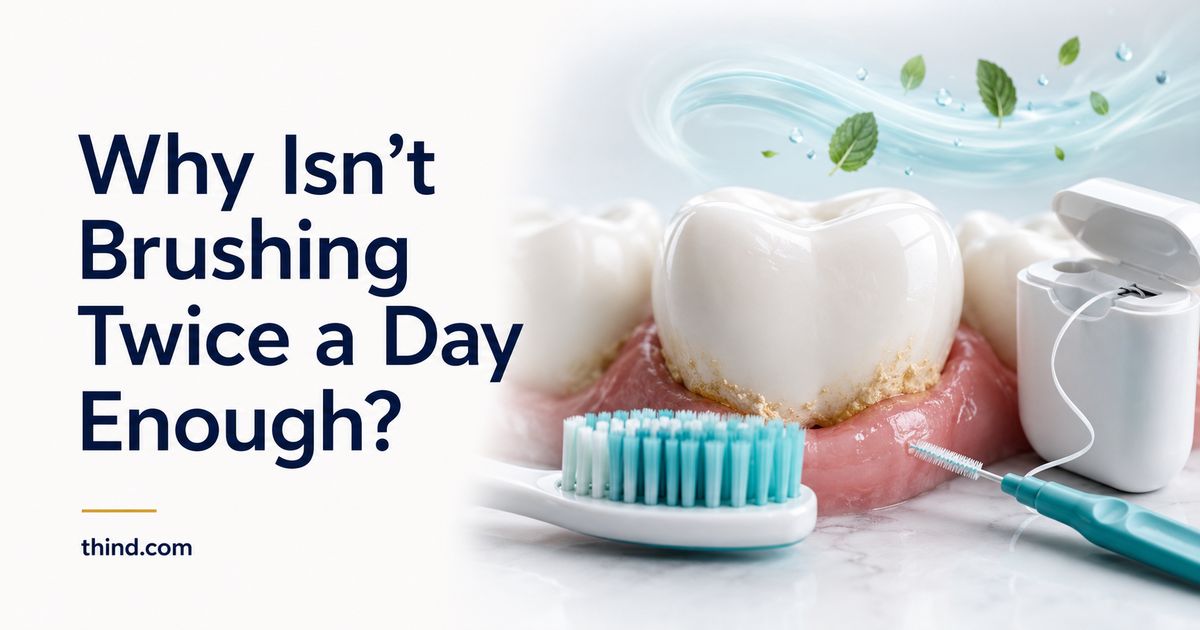
Nearly one in three people worldwide are dealing with bad breath at any given moment, and it has almost nothing to do with how many times a day they brush. According to a 2018 meta-regression analysis in Clinical Oral Investigations by Silva and colleagues, the estimated global prevalence of halitosis is 31.8 percent. Brushing clears surface debris. It does not reach the hardened layer that quietly builds up below the gumline, which is where most persistent bad breath and gum problems actually begin.
Quick answer: Dental plaque is a soft, sticky film of bacteria that forms on teeth continuously, even after brushing. Left in place for a day or two, it hardens into a rough mineral deposit called calculus, or tartar, that a toothbrush cannot remove. Chronic bad breath, puffy gums, and bleeding while brushing are usually signs that plaque has already progressed to calculus and early gum disease. Daily brushing and flossing control new plaque, but only professional scaling, at an interval matched to your own risk, removes what has already hardened, so waiting longer between cleanings simply lets the buildup compound.
How common is bad breath, and is brushing really the issue?
Bad breath is extremely common, and for most people it is not a brushing problem at all. It is a bacterial one. Halitosis is the clinical term for persistent unpleasant breath odor, most often caused by bacteria breaking down food debris and dead cells on the tongue, between teeth, and below the gumline.
The 2018 Clinical Oral Investigations analysis pooled dozens of population studies and landed on that 31.8 percent global prevalence figure, with rates varying by region and measurement method. Mouthwash and mints mask the smell for an hour or two. They do not remove the bacterial colonies living in plaque and calculus, which is why the odor keeps returning within hours for so many people.
How many adults already have gum disease building up right now?
About half. A 2020 systematic review and meta-analysis in the Journal of Oral Biology and Craniofacial Research by Janakiram, Mehta, and Venkitachalam pooled 30 studies covering 92,219 Indian adults and found an overall periodontal disease prevalence of 51 percent, with gingivitis alone affecting 46.6 percent of the group.
This is not only an Indian pattern. In the United States, periodontal disease affects over 40 percent of adults over age 30, according to a December 2025 American Heart Association scientific statement. The same statement links poor oral hygiene directly to cardiovascular risk, not just dental discomfort.
“Your mouth and your heart are connected. Gum disease and poor oral hygiene can allow bacteria to enter the bloodstream, causing inflammation that may damage blood vessels and increase the risk of heart disease,” said Dr. Andrew H. Tran, M.D., pediatric cardiologist and director of the Preventive Cardiology Program at Nationwide Children’s Hospital, Columbus, Ohio, who chaired the AHA statement.
That single sentence reframes the problem. A missed cleaning is not just a cosmetic gap. It is a small, compounding risk to more than the mouth.
Why does brushing stop working once plaque hardens into tartar?
Brushing stops working the moment plaque calcifies, because calculus bonds to the tooth surface in a way a bristle cannot break. Fresh plaque is soft and can be brushed or flossed away within about 24 to 48 hours of forming. Once minerals from saliva harden it into calculus, only mechanical scaling by a dental professional can remove it without damaging the tooth.
This is also why the gumline is the trouble spot. Calculus that forms just below the gum edge irritates the surrounding tissue continuously, which is what triggers the swelling, bleeding, and odor that patients notice long before they notice any visible staining.
What is the difference between routine scaling and deep cleaning (root planing)?
Routine scaling and polishing clears everyday plaque and light tartar above and just below the gumline, while root planing goes deeper to smooth root surfaces once gum disease has already taken hold. The right one depends on how far the buildup has progressed, not on personal preference.
Type of cleaning
What it targets

Typical frequency

Approx. cost in India (2026)

Routine scaling and polishing

Surface plaque and light tartar above the gumline

Every 6 months

₹1,000 to ₹3,500

Ultrasonic deep scaling

Tartar and bacteria below the gumline

Once a year, or sooner for higher-risk gums

₹2,500 to ₹6,000

Root planing (for early gum disease)

Smooths root surfaces so inflamed gums can reattach

Every 3 to 12 months, based on individual risk

₹4,000 to ₹12,000, depending on the area treated

These figures are indicative and inclusive of standard clinical charges; a dentist can only confirm an exact figure after examining your gums and X-rays.
What is actually changing in how people manage plaque and gum disease as of 2026?
As of July 2026, two things are changing: the research now supports personalizing cleaning intervals instead of a flat once-a-year rule, and more Indians are spending on preventive oral care than ever before. Neither shift has fully reached patient habits yet, which is exactly the gap causing so much silent gum disease.
An October 2024 rapid review in JDR Clinical & Translational Research by Matthews and Al-Waeli found that for adults with periodontitis, scaling on an individualized schedule of 3 to 12 months, rather than a fixed annual visit, meaningfully reduced tooth loss and disease recurrence. The same review found that adults receiving scaling once or twice yearly also showed lower rates of cardiac events, reinforcing the mouth-heart connection.
At the same time, spending on oral care is rising fast. Grand View Research values India’s oral care market at USD 3,182.0 million in 2024, projecting it to reach USD 5,003.6 million by 2030, a 7.9 percent annual growth rate. That kind of growth usually signals a population that is finally catching up on years of underinvestment in prevention, not a passing trend.
How should a smart patient judge whether a dental cleaning is actually being done properly?
A properly done cleaning is judged by what happens before and after the scaling itself, not just by how smooth your teeth feel afterward. A handful of criteria separate a thorough visit from a rushed one.
- Whether the clinic follows documented, standardized hygiene and sterilization protocols for every instrument, not just visible cleanliness in the waiting area.
- Whether the equipment includes ultrasonic scalers and digital or laser-assisted tools that reach below the gumline comfortably, rather than manual tools alone.
- Whether your gums, and not only your teeth, are actually examined and measured before a cleaning interval is recommended.
- Whether the same team can move from preventive scaling into gum therapy or restorative care if something is found, instead of referring you elsewhere and restarting the process.
- Whether the clinic is genuinely convenient to reach on a busy schedule, since the most effective cleaning interval is the one a patient will actually keep.
What should you look for before booking a scaling and cleaning appointment?
Before booking, look for a clinic that treats scaling as a diagnostic visit, not just a polish. The following checklist covers what actually matters.
- Look for a clinic that follows NABH-grade hygiene and sterilization standards, and is willing to explain them if asked.
- Look for a clinic that uses ultrasonic scaling and laser-assisted or non-contact tools rather than manual instruments alone, since these reach below the gumline with less discomfort.
- Look for a clinic that assesses your personal gum health and recommends an interval based on your risk, not a generic “once a year” script.
- Look for a dentist experienced across both preventive and cosmetic dentistry, so early signs of other issues are flagged during a routine visit.
- Look for a clinic with multiple, easy-to-reach locations and flexible hours, so a busy calendar stops being the reason a cleaning gets pushed back.
- Look for a clinic that explains the plaque-to-calculus-to-gum-disease progression clearly before recommending treatment, not after the bill arrives.
Where does pain-free, thorough scaling actually come together in Ludhiana?
Everything covered so far points to the same conclusion: fresh breath and healthy gums come from personalized, professionally done scaling, not from switching toothpaste brands. Thind Dental Clinic, an NABH-approved practice across three locations in Ludhiana run by Dr. Rajanbir Singh Thind and Dr. Gurinder Kaur Thind, is built around exactly this approach.
The clinic uses ultrasonic scaling and non-contact laser technology for gentle, precise gum and cavity care, and its team assesses each patient’s gum health individually rather than defaulting to a one-size-fits-all cleaning schedule.
If bad breath, bleeding gums, or a “someday I’ll get it checked” feeling sounds familiar, the data above suggests someday is already costing you something. A short, honest assessment is the fastest way to find out exactly where you stand.
The most useful next step is a free smile assessment and consultation, where your gums and plaque buildup are actually examined before anyone recommends a treatment plan. There is no obligation attached, and it typically takes less time than the problem has already taken to build up. It is a low-friction way to replace guesswork with an actual picture of your oral health.
Frequently asked questions
How often should I get my teeth professionally scaled and cleaned?
Most healthy adults benefit from scaling every 6 months, but the 2024 JDR Clinical & Translational Research review found that adults with existing gum disease do better on an individualized 3 to 12 month schedule. The right interval depends on your personal gum health, not a fixed calendar rule.
Does dental scaling weaken or damage tooth enamel?
No. Scaling removes plaque and calculus sitting on top of the enamel; it does not remove or thin the enamel itself when performed by a trained professional. Sensitivity right after scaling is common and temporary, since the tooth surface is briefly exposed after tartar is cleared away.
Will scaling get rid of bad breath permanently?
Scaling removes the bacterial buildup that causes most persistent bad breath, which typically improves breath noticeably. It is not permanent on its own though, since new plaque starts forming again within hours, so daily brushing, flossing, and a maintained cleaning schedule are what keep the improvement.
Is teeth scaling painful?
For most patients, routine scaling causes mild sensitivity rather than real pain, and local anesthesia is available for deeper cleaning or root planing when needed. Modern ultrasonic and laser-assisted tools have made the experience considerably more comfortable than older manual methods.
Can bleeding gums during brushing go away on their own without treatment?
Occasionally mild bleeding improves with better brushing and flossing alone, but persistent bleeding is usually a sign of gingivitis or early periodontal disease that needs professional scaling to actually resolve. Ignoring it typically allows the underlying plaque and calculus to keep building rather than clearing up by itself.
Sources
- Silva MF, Leite FRM, Ferreira LB, et al., “Estimated prevalence of halitosis: a systematic review and meta-regression analysis,” Clinical Oral Investigations, 2018
- Janakiram C, Mehta A, Venkitachalam R, “Prevalence of periodontal disease among adults in India: A systematic review and meta-analysis,” Journal of Oral Biology and Craniofacial Research, 2020
- American Heart Association, “Gum disease may be linked to plaque buildup in arteries, higher risk of major CVD events,” Newsroom, December 16, 2025
- Matthews DC, Al-Waeli H, “Benefits of Dental Scaling and Polishing in Adults: A Rapid Review and Evidence Synthesis,” JDR Clinical & Translational Research, October 2024
- Grand View Research, “India Oral Care Market Size & Outlook, 2025-2030”