Published: September 13, 2026. Last updated: September 13, 2026.
Dr. Rajanbir Singh Thind, Thind Dental Clinic
Most patients now research a healthcare provider the way they research a hotel: reviews, photos, ratings, star counts. Almost none of them ask the one question that actually predicts whether a dental visit is safe: how are the instruments in this room actually sterilized between patients?
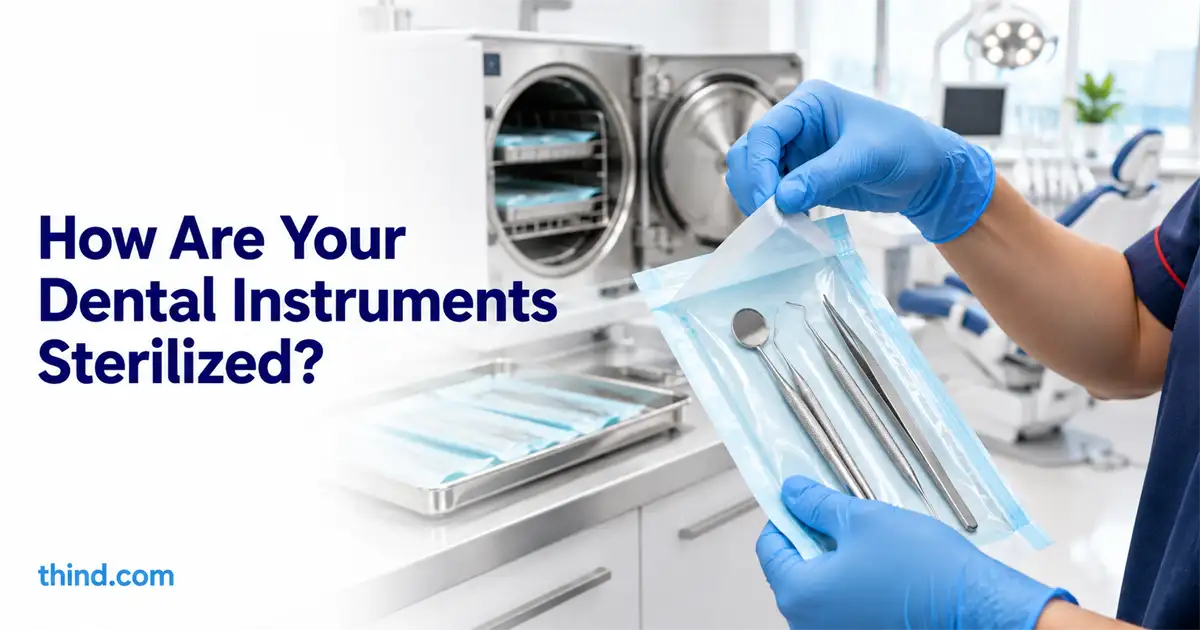
A trustworthy dental clinic treats sterilization as a visible, explainable standard, not a private backroom process. It uses a documented autoclave cycle with sealed, dated pouches opened just before treatment, follows single-use protocols for needles and similar items, and willingly explains its process when asked. Research from 2025 and 2026 shows most patients research a provider’s reviews in detail before booking, yet rarely ask about infection control, even though a 2026 study of Indian dental clinics found real compliance gaps in some private practices. NABH or equivalent accreditation, digital documentation, and staff who answer sterilization questions without hesitation are the clearest signs that hygiene is an actual practice standard, not a marketing claim.
Sterilization is the process of destroying all microorganisms, including bacterial spores, on an instrument, usually inside an autoclave using pressurized steam. Disinfection is a weaker process: it reduces germs on a surface but does not guarantee spores are killed. In a dental clinic, this difference decides whether a "clean-looking" instrument is actually safe to use on the next patient.
How Common Are Sterilization Gaps in Indian Dental Clinics Right Now?
They are more common than most patients assume, and qualification level appears to matter. A 2026 cross-sectional study of 70 private dental clinics in India, published in Bioinformation, found significant gaps in sterilization practices overall, with postgraduate (MDS) qualified dentists showing significantly higher compliance across multiple domains than general (BDS) practitioners.
This is not an isolated finding. The IMARC Group’s 2025 industry report values the global dental sterilization equipment market at USD 2.1 billion in 2025, projected to reach USD 3.7 billion by 2034, and names rising awareness of cross-contamination risk as a primary reason clinics are investing in better equipment.
Put simply: as of September 2026, the industry itself is spending more on sterilization technology because the risk is real, not theoretical. That investment only protects patients when it is paired with consistent daily practice, which is where gaps tend to appear.
Why Do Sterilization Failures Happen Even With Modern Equipment?
Because the equipment is rarely the weak point. A February 2025 review published in Cureus on sterilization and disinfection in dental practices found that bacterial growth inside sterilization cycles is usually traced back to human error or equipment mishandling, not a flaw in the sterilization method itself.
In plain terms, an autoclave rated for a 7-log reduction in microorganisms can still fail if a pouch is loaded incorrectly, a cycle is cut short to save time, or a new staff member was never properly trained. This is exactly why continuity of staff and training matters as much as the machine on the counter.
The same review noted that different sterilization technologies, from hydrogen peroxide vapor to steam autoclaves, can each achieve very high microbial reduction rates on paper. The gap between "rated performance" and "actual daily performance" is almost always a training and process issue, not a technology one.
Why Is Patient Trust Becoming the Real Differentiator in Dentistry?
Because patients now shop the way they research everything else: online, before they ever sit in the chair. A 2025 rater8 patient research report found that 84 percent of patients check online reviews before choosing a new healthcare provider, and 41 percent said their trust increased specifically when providers responded openly and transparently to patient feedback.
That statistic reveals something important: transparency itself has become a trust signal, not just an outcome. A clinic that explains its sterilization process, shares its accreditation, and answers hygiene questions directly is doing, in person, what patients already reward providers for doing online.
This shift matters globally, not only in India. As Dr Bente Mikkelsen, WHO Director for Noncommunicable Diseases, said in a 2022 World Health Organization statement: "Placing people at the heart of oral health services is critical if we are to achieve the vision of universal health coverage for all individuals and communities by 2030." WHO Director-General Dr Tedros Adhanom Ghebreyesus has similarly noted that "oral health has long been neglected in global health, but many oral diseases can be prevented and treated with the cost-effective measures" already available.
The scale of the underlying problem is large. The World Health Organization’s 2022 Global Oral Health Status Report found that oral diseases affect an estimated 3.5 billion people, 45 percent of the world’s population, with three out of four affected people living in low and middle income countries, a group that includes India.
What Should Define How You Choose a Dental Clinic in 2026?
Choosing a dental clinic should start with process, not appearance. A clean-looking waiting room says very little about what happens to instruments between patients, so the criteria below focus on what is actually verifiable.
-
Visible, not hidden, sterilization. A clinic that can describe its infection prevention and control process in plain language, including pouch sealing and cycle indicators, is treating hygiene as a system rather than a slogan.
-
Independent accreditation, not self-description. NABH or equivalent third-party accreditation means an outside body has reviewed the clinic’s actual protocols, not just its marketing copy.
-
Technology that reduces risk and discomfort together. Digital scans and laser-based treatment reduce the number of physical touchpoints during certain procedures, which can lower both patient discomfort and cross-contamination opportunity.
-
Continuity of clinical staff. Since the 2025 Cureus review linked sterilization failures to human error more than equipment, a stable, experienced team is a genuine safety factor, not just a comfort preference.
-
Consistency across every location. A multi-location clinic that holds every branch to the same documented standard is demonstrating a system. One that varies branch to branch is really relying on individual staff effort.
What Should You Actually Look For Before Your Next Dental Visit?
Look for evidence, not impressions. The table below separates the signals that actually indicate a genuine hygiene standard from the ones that only look reassuring.
|
Signal to Look For |
What It Actually Means |
|---|---|
|
Sealed, dated sterilization pouches opened in front of you |
Instruments were sterilized for this visit specifically, not batch-processed days earlier |
|
NABH or equivalent third-party accreditation |
Hygiene has been independently verified, not just self-reported by the clinic |
|
Staff answer sterilization questions without hesitation |
The process is standardized and staff are actually trained on it, not improvising an answer |
|
Digital records and full-mouth scans |
Diagnosis and instrument use are tracked, reducing guesswork and repeat invasive steps |
|
Same core clinical team across visits |
Lower risk of the training gaps that the 2025 Cureus review linked to sterilization failures |
|
Consistent standards across multiple locations |
Hygiene is built as a system, not dependent on one individual staff member’s effort |
None of these signals require special knowledge to check. They only require asking, which is exactly the step most patients currently skip.
What Should You Look For in Root Canal or Implant Procedures Specifically?
Look for the same standard, applied more strictly, because these procedures involve deeper tissue contact. A root canal treatment and a dental implant both require instruments to reach past the enamel into tissue that is far less forgiving of contamination than a routine cleaning.
For these procedures specifically, ask whether single-use files are used where applicable, how surgical instruments are packaged, and whether the clinic uses digital imaging to plan the procedure before any incision or access is made. A clinic offering cosmetic dentistry alongside these procedures should be able to explain hygiene standards for both with equal confidence, since the underlying sterilization system should not change based on which treatment is booked.
Thind Dental Clinic in Ludhiana was built around exactly this kind of visible, checkable standard. As an NABH-approved practice, it pairs documented sterilization protocols with digital diagnostics and non-contact laser treatment options, and you can meet the dentists behind Thind Dental Clinic, Dr. Rajanbir Singh Thind and Dr. Gurinder Kaur Thind, who oversee care personally rather than rotating it between unfamiliar staff.
The clinic’s three locations across Ludhiana follow the same protocol rather than three different ones, and its digital diagnostics and laser dentistry programs are built to reduce both discomfort and unnecessary physical contact during treatment. Patients are encouraged to ask about any part of the process, sterilization included, before committing to treatment.
If you have been putting off a dental visit because you were never sure what a clinic’s real hygiene standard actually looks like, the simplest next step is to see it for yourself and ask. You can book a free smile assessment and consultation and walk through the checklist above in person, including exactly how instruments are sterilized between patients. There is no obligation attached to asking, only clarity, and clarity is what turns a hesitant patient into a confident one.
Frequently Asked Questions
What is the difference between sterilization and disinfection in a dental clinic?
Sterilization kills all microorganisms, including bacterial spores, typically using a pressurized steam autoclave. Disinfection only reduces germs on a surface and does not guarantee spores are eliminated, so any instrument touching blood, saliva, or soft tissue needs sterilization, not just a wipe-down.
How often should dental instruments be sterilized?
Reusable dental instruments should be sterilized after every single patient use, ideally from a freshly sealed and dated pouch opened just before or during your treatment. If a clinic cannot describe this process clearly, that is worth asking more about.
What does NABH accreditation actually mean for a dental clinic?
NABH accreditation means the clinic has been independently assessed against documented national standards covering patient safety, hygiene, and clinical process, not simply self-declared cleanliness. It gives patients a third-party reference point instead of relying on appearances alone.
Can laser dentistry reduce infection risk compared to traditional drilling?
Non-contact laser treatment reduces the number of instruments that physically touch the tooth and surrounding tissue during certain procedures, such as cavity treatment, which can lower some cross-contamination touchpoints. It does not replace sterilization protocols, but it can reduce a few of the variables that otherwise depend on human handling.
Is it rude to ask a dentist about their sterilization process?
No. A clinic that treats hygiene as a genuine standard will expect and welcome the question, and hesitation or irritation in response is itself useful information. Patients are entitled to understand how their own safety is being protected during any procedure.
Do more dental visits or more clinic locations increase infection risk?
Not if the clinic maintains the exact same documented sterilization protocol across every location and every visit, since consistency is what determines risk, not frequency. The variable worth watching is whether standards slip between branches or staff, not how often you visit.