Published: November 6, 2026
Last updated: November 6, 2026
Dr. Rajanbir Singh Thind, Thind Dental Clinic
Quick answer
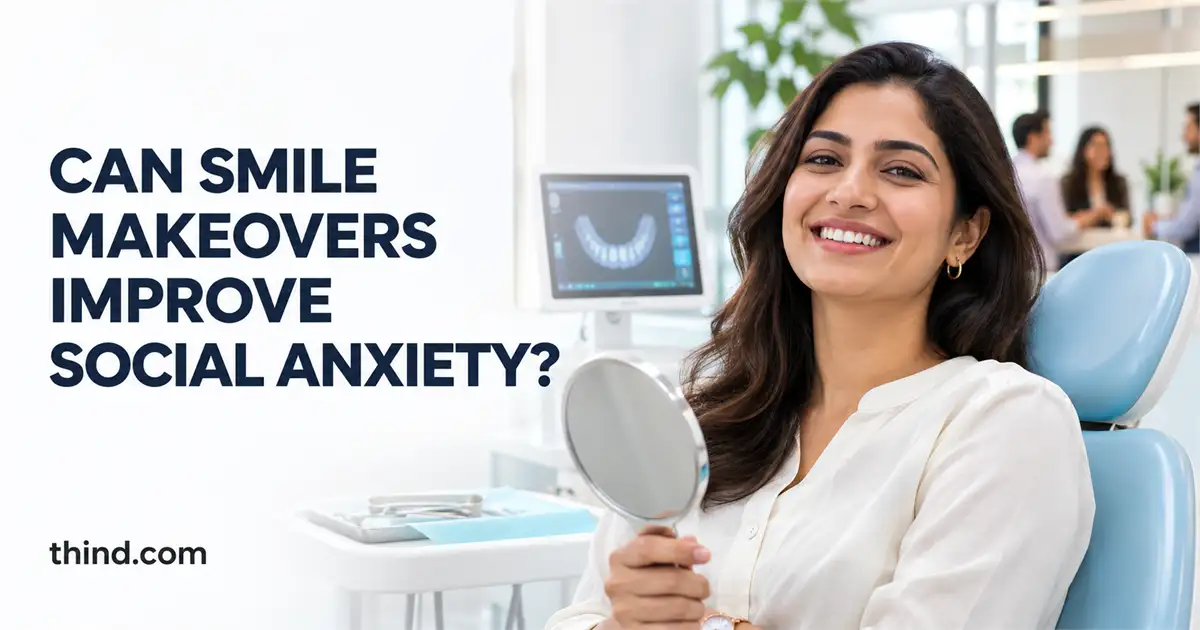
A smile makeover can ease smile-related self-consciousness, one trigger of social discomfort, but it is not a treatment for clinical social anxiety disorder. A 2023 review of 31 studies found that aesthetic dental treatment improved self-esteem and quality of life, while evidence for orthodontic care is lower in quality and based on small, varied studies. If anxiety is severe or constant, a mental health professional should lead, with careful, well-planned dental care as a supportive step, once you have talked through realistic expectations.
How common is social anxiety, and why does it matter to your smile?
Social anxiety is common, and it is expensive in daily life. A 2022 systematic review and meta-analysis in Scientific Reports (Rajkumar et al.) pooled eight studies and 4,509 rural Indian adolescents and found a social anxiety prevalence of 23% (95% CI 17 to 30%). Prevalence was 28% in girls and 16% in boys.
Among adults, a nationally representative survey of 34,802 people in India (Suhas et al., Indian Journal of Psychiatry, 2023) found that 0.47% met criteria for the full disorder. Those affected reported disability in social life (77%) and work (63%), and the treatment gap was 82%. Source: Suhas et al., Indian Journal of Psychiatry, 2023.
These numbers describe the clinical end of a wide spectrum. Many more working adults and students sit below the diagnostic line yet still avoid photos, cover their mouth when laughing, or stay quiet in meetings because of how their teeth look.
What does the research say about smile treatment and self-esteem?
Research suggests aesthetic dental treatment tends to raise self-esteem and quality of life, but the evidence is modest. Self-esteem is a person’s overall sense of their own worth, and it often shapes how comfortable they feel around others.
An integrative review in RGO (Ferreira et al., 2023) screened 834 articles and included 31 published between 2016 and 2021. It concluded that aesthetic and psychosocial self-perception improved self-esteem and quality of life after aesthetic dental treatment. Source: Ferreira et al., RGO Revista Gaucha de Odontologia, 2023.
For orthodontic treatment, the picture is more cautious. A 2023 systematic review in Cureus (Shaadouh et al.) included 16 studies, and six reported a significant rise in self-esteem after treatment. The authors graded the evidence as very low to low quality and called for better trials. Source: Shaadouh et al., Cureus, 2023.
Does improving how teeth look always improve how people feel?
No. Results depend on which part of the smile is treated and what the patient hoped for. A 2019 systematic review and meta-analysis of vital tooth bleaching pooled four studies and found no overall change in oral health related quality of life (standardized mean difference 0.04, 95% CI -0.15 to 0.24).
The same review noted that appearance-related domains, such as smiling and psychological discomfort, tended to improve, while sensitivity-related domains tended to worsen. Source: 2019 systematic review and meta-analysis on vital tooth bleaching (PubMed). The lesson is that a better-looking smile helps most when it fixes the specific thing that makes a person self-conscious.
Which smile concerns most often drive social discomfort?
The concerns that most often drive discomfort are visible, specific, and fixable. The table below sets out common ones and the kind of care, from tooth whitening to veneers, that addresses them. It is a guide to the conversation with your dentist, not a promise of results.
| Smile concern | Why it can affect social comfort | Care that may address it |
|---|---|---|
| Crowded or gapped teeth | Makes people hide their smile in photos and meetings | Clear aligners or other orthodontic care |
| Stained or yellow teeth | Creates a feeling of looking older or unwell | Professional tooth whitening |
| Chipped or uneven edges | Draws attention when speaking or laughing | Bonding, reshaping, or veneers |
| Gummy or uneven gum line | Makes the smile feel unbalanced | Gum contouring as part of a planned design |
What should a smart buyer look for in a smile makeover?
A smart buyer looks for a plan built around the person, not a standard package. Cosmetic dentistry covers many treatments, and the right mix depends on your teeth, gums, and goals.
- Hygiene you can verify: accreditation such as NABH approval shows that sterilization and safety are audited.
- Digital planning: scans and previews let you see the proposed result before any treatment begins.
- Gentle technology: laser and low-discomfort methods matter if fear of pain has kept you away.
- Experienced, consistent clinicians: a team that follows your case from first visit to final polish reduces surprises.
- Convenient access: multiple locations and flexible timing help working professionals actually finish treatment.
What is a practical checklist before you commit?
A short checklist keeps the decision calm and objective. Ask each item of any clinic you consider.
- Will you explain which concern each treatment addresses, and what it will not change?
- Can I see a digital preview or plan before I agree?
- How is the clinic’s sterilization process audited or certified?
- What is the full timeline, and how many visits will it take?
- What maintenance, such as retainers or polishing, will protect the result?
- If I also feel persistent anxiety, will you support me in seeking professional help alongside dental care?
Where can you start a smile assessment in Ludhiana?
You can start with Thind Dental Clinic, an NABH-approved practice with three locations in Ludhiana, Punjab. Dr. Rajanbir Singh Thind and Dr. Gurinder Kaur Thind plan smile makeovers and clear aligner treatment using digital planning and laser dentistry.
The team designs each plan around your face, your teeth, and the concern that bothers you most, so the result looks natural and the process feels comfortable.
If you have been hiding your smile and want to understand your options without pressure, you can book a free smile assessment and consultation at thind.com. Bring your questions, and leave with a clear plan.
Frequently asked questions
Can a smile makeover cure social anxiety?
No. Social anxiety disorder is a clinical condition treated by mental health professionals. A smile makeover can reduce self-consciousness that is specifically about your teeth, which may make social situations easier.
How soon might I feel more confident after treatment?
It varies by treatment. Whitening or bonding can change your smile in one or two visits, while aligners and full makeovers take months. Confidence often grows as you see your smile change.
Are clear aligners a good choice if I dislike being noticed?
Many adults choose them because they are discreet. Your dentist can tell you whether your bite and tooth position suit aligners and how long they would take.
Will a dentist judge me for avoiding visits?
A good dentist will not. Many patients delay care because of fear, cost, or embarrassment. A calm first consultation is meant to explain, not pressure.
Is a smile makeover worth it if my concern is small?
Often a small, targeted change is the right answer. A subtle correction to one tooth or to color can make a visible difference without a full redesign.
Sources
- Rajkumar E, et al. Prevalence of mental health problems among rural adolescents in India: a systematic review and meta-analysis. Scientific Reports, 2022
- Suhas S, et al. Nationally representative epidemiological study of social anxiety disorder from India. Indian Journal of Psychiatry, 2023
- Ferreira PDF, et al. Self-perception of aesthetic dental treatment: an integrative review. RGO Revista Gaucha de Odontologia, 2023
- Shaadouh RI, et al. Evaluation of the impact of orthodontic treatment on patients’ self-esteem: a systematic review. Cureus, 2023
- Systematic review and meta-analysis of vital tooth bleaching and oral health related quality of life, 2019 (PubMed)