Published: July 25, 2026 | Last updated: July 25, 2026
By Dr. Rajanbir Singh Thind, Thind Dental Clinic
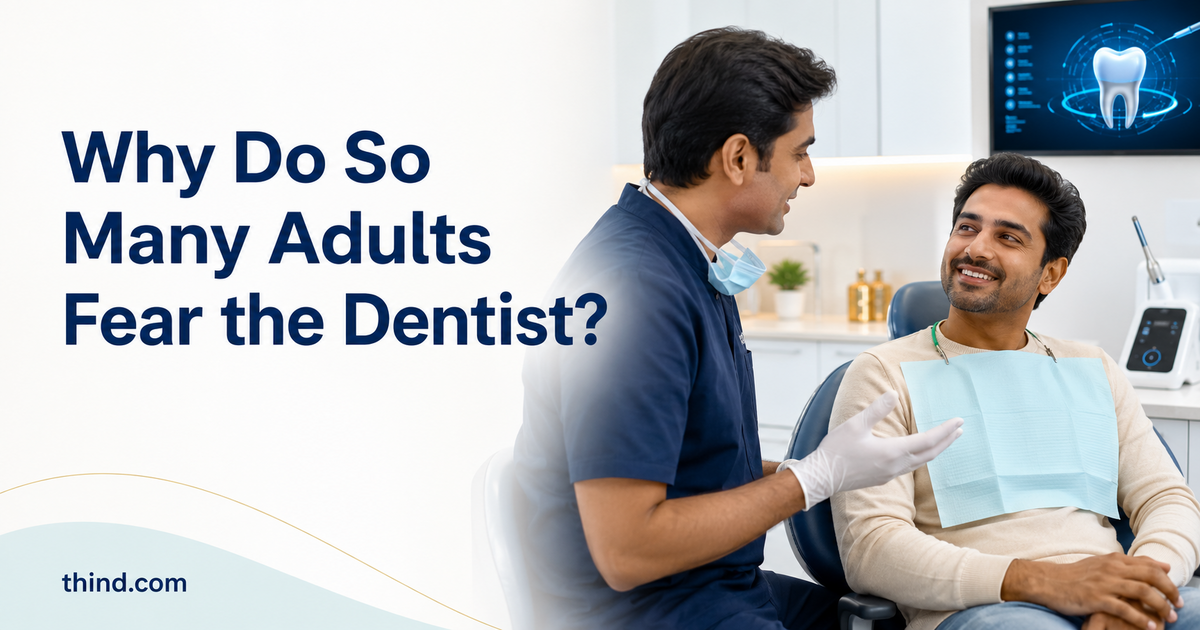
Here is something most people do not expect: fear of the dentist has not shrunk as dental technology has improved. According to a September 2025 study in the Journal of the American Dental Association led by researchers at New York University, 72.6% of adults report being afraid of visiting the dentist, and 26.8% describe that fear as severe. This is happening in an era of numbing gels, digital anesthesia delivery, and laser tools that barely touch a nerve. The fear has not caught up with the technology.
Quick answer: pain-free dentistry is a defined shift in how treatment is delivered, not a marketing phrase. It combines refined local anesthesia technique, laser-based tools that reduce or remove the need for a drill, and clearer communication so patients know what to expect before a procedure begins.
As of July 2026, research shows fear has stayed high even as these tools have improved, which means the real gap is not physical pain anymore. It is outdated expectations, unclear information, and clinics that have not adopted gentler methods. Closing that gap starts with understanding what has actually changed.
What does it actually cost you to keep avoiding the dentist out of fear?
It costs more the longer it continues, and Indian data shows most adults are already waiting too long. Only 51.5% of respondents had visited a dentist within the past 12 months, and 8.1% had never visited a dentist at all, according to a February 2025 joint report from the Indian Dental Association and the FDI World Dental Federation.
The same report found that 33.7% of respondents had experienced dental pain in the past year, a sign that many people are arriving at the clinic only after a problem has already progressed. Waiting does not pause a dental problem. It tends to move it through a predictable sequence.
- Early stage: a small cavity or sensitivity that a short, minor procedure can usually resolve.
- Delayed months: the same issue reaches the nerve, and what could have been a small filling now needs a root canal treatment.
- Delayed further: infection or structural damage increases, and extraction becomes a real possibility instead of a distant one.
- Left untreated long term: the surrounding teeth, gums, and bite are affected too, turning a single-tooth problem into a whole-mouth one.
None of this happens because a patient was careless. It happens because fear delayed the decision, and delay is what let a small, manageable problem grow.
Why do so many adults still fear the dentist in 2026, when the tools have changed so much?
Because dental fear usually forms early, often from one vivid memory, and it does not update automatically just because technology has moved on. Roughly 19% of adults and 24% of children and adolescents experience meaningful dental anxiety, according to a September 2025 study published in Frontiers in Oral Health by researchers at Temple University’s Kornberg School of Dentistry.
“The overall message of the research is understanding just how common dental anxiety is,” said Elizabeth Konneker, lead author of the study and researcher at the Kornberg School of Dentistry, Temple University. “Having a resource of some kind that normalizes dental anxiety and being able to provide people with the tools that makes them feel better at the dentist is important,” she added, describing the same research.
That pattern matters because it explains why so many capable, otherwise health-conscious adults still avoid routine care. The fear was formed years ago, often before any of today’s gentler tools existed, and nobody ever gave them a reason to reconsider it.
What has actually changed in how dentists manage pain, and is it real or just marketing?
It is real, and it is measurable in both patient experience and industry investment. “A better understanding of dental fear, and how to increase access to effective treatments for it, holds promise for improving oral and overall health,” said Richard Heyman, PhD, Professor at the NYU Dentistry Center for Oral Health Policy and Management, in coverage of the September 2025 JADA study.
Kelly Daly, PhD, Assistant Research Scientist at the NYU Dentistry Family Translational Research Group, added: “Memories of traumatic dental care can be remarkably vivid and tend to have lifelong implications.” That single point explains why one bad childhood visit can shape decades of avoidance, even after treatment methods change completely.
The technology backing that change is growing fast. The global dental lasers market was valued at USD 331.7 million in 2022 and is projected to reach USD 589.1 million by 2030, a 7.6% annual growth rate, according to Grand View Research, with Asia Pacific posting the fastest regional growth at 8.1% a year as clinics adopt gentler, more precise tools. Laser-based treatment for cavities can often work without the vibration, pressure, and noise of a traditional drill, which is frequently what triggers fear more than the actual sensation of treatment.
Approach
What it does

Best suited for

What the patient typically feels

Local anesthesia (modern technique)

Numbs the treatment area before a procedure using refined injection methods

Fillings, root canals, extractions

A brief pinch, then no sensation at the site

Non-contact laser treatment

Uses focused light to treat cavities or soft tissue without a spinning drill

Early cavities, gum reshaping, minor procedures

Minimal to no vibration or pressure, often no injection needed

Digital anesthesia delivery

Computer-controlled devices deliver anesthetic at a slow, steady, comfortable rate

Patients sensitive to the classic injection sensation

Reduced sting compared to manual injection

Mild sedation options

Reduces anxiety and awareness during longer or multi-step procedures

Higher dental anxiety, longer procedures

A calmer, relaxed state throughout treatment

How should a smart patient actually choose where to get treatment, given all this?
The old way of choosing a dentist, mainly proximity and price, misses the factors that determine whether treatment is actually comfortable. A smarter approach weighs a handful of criteria that reflect how a clinic is actually run, not just what it charges.
- Verified hygiene and sterilization standards, not just a clean-looking waiting room, since infection risk is invisible until it is not.
- Access to laser and digital diagnostic technology that reduces the need for drilling and gives a clear, visual picture of a problem before treatment starts.
- Continuity of care from an experienced, consistent team, rather than a rotating roster of different dentists at every visit.
- Multiple accessible locations, since a long commute is often the quiet reason a follow-up appointment gets skipped.
- A clear, upfront assessment before any treatment plan is proposed, so cost and process are known in advance rather than discovered mid-procedure.
What should you actually look for in a clinic if dental fear has kept you away?
Look for specific, checkable signals rather than general reassurance. The following checklist reflects what separates a genuinely low-anxiety clinic experience from one that only claims to be gentle.
- Look for a clinic that can show or explain its sterilization protocol clearly when asked, not one that deflects the question.
- Look for a clinic offering laser-based options for common procedures like cavity treatment, not only the traditional drill.
- Look for digital scanning or imaging used during assessment, since it replaces guesswork with a visible, shared picture of the problem.
- Look for a team with years of continuous practice together, since coordination between dentists reduces repeat explanations and delays.
- Look for a free or low-cost initial assessment, so the first step does not require committing to a full treatment plan blind.
- Look for a clinic that explains each step before doing it, since uncertainty, not sensation, is usually the real source of dental fear.
Where does this actually lead, once you know what to look for?
Thind Dental Clinic in Ludhiana was built around exactly this shift. As an NABH-approved practice run by Dr. Rajanbir Singh Thind and Dr. Gurinder Kaur Thind across three clinic locations, the team uses non-contact laser cavity treatment alongside digital diagnostic scanning specifically to reduce the drilling, noise, and uncertainty that drive dental fear in the first place.
For someone who has been avoiding treatment for exactly the reasons covered above, exploring painless treatment options at Thind Dental Clinic is a low-pressure way to see what modern, gentler dentistry actually feels like before committing to anything.
The most practical next step is not a procedure. It is information. Choosing to book a free smile assessment and consultation gives a clear, digital picture of what a mouth actually needs, explained in plain language, before any treatment decision is made. For most people who read this far, that single, low-pressure step is what finally turns years of avoidance into a manageable plan, and it costs nothing to find out where things stand by choosing to schedule a consultation with the dentists at Thind Dental Clinic.
Frequently asked questions
Does laser dental treatment really hurt less than a traditional drill?
For many common procedures, yes, because laser treatment removes much of the vibration, pressure, and heat associated with a spinning drill. It often reduces or eliminates the need for an injection for minor cavities, though case severity still determines the exact approach a dentist recommends.
Is dental anxiety a real medical concern, or is it just nervousness?
It is a recognized and researched condition, not simple nervousness. Research from Temple University’s Kornberg School of Dentistry found meaningful dental anxiety in roughly 19% of adults, and clinics increasingly build specific protocols around it rather than treating it as a personality trait to push through.
Can someone with severe dental fear get treatment without full sedation?
In many cases, yes. Modern local anesthesia, laser-based treatment, and clear step-by-step communication resolve most of the discomfort that drives fear, and sedation is typically reserved for longer procedures or more pronounced phobia rather than being the default starting point.
How often should someone with dental fear still schedule checkups?
Roughly every six months, the same general guidance given to any patient, since routine checkups catch small problems while they are still minor and quick to treat. Skipping checkups because of fear is exactly what allows small issues to become the larger, more difficult ones described earlier in this article.
Does a painless visit still involve X-rays or scans?
Usually yes, and this is a good thing rather than something to be wary of. Digital scans and X-rays are non-invasive, quick, and are what allow a dentist to explain a problem clearly and plan the least invasive treatment option available.
Sources
- DentistryIQ: coverage of the September 2025 JADA census-matched survey on dental fear (NYU Dentistry)
- Temple University Kornberg School of Dentistry: September 2025 study on the onset of dental anxiety, published in Frontiers in Oral Health
- Indian Dental Association and FDI World Dental Federation: February 2025 report on oral health status and care-seeking behavior in India
- Grand View Research: Dental Lasers Market Size, Share and Trends report