Dr. Rajanbir Singh Thind, Thind Dental Clinic
A child’s first dental experiences can shape how they feel about dental care for years. That does not mean one imperfect appointment creates a lifelong phobia, and it does not mean every child who visits early will always be relaxed. Dental fear is influenced by many things, including temperament, a parent’s anxiety, previous pain, and how the dental team communicates. But the first year gives families a valuable chance to make dentistry familiar before toothache, swelling, or an emergency makes it frightening.
Quick answer: Current pediatric dental guidance recommends establishing a dental home within six months after the first tooth appears and no later than 12 months of age. An early, preventive visit is usually simple: the dentist checks development and decay risk, shows parents how to clean new teeth, discusses feeding and fluoride, and lets the child experience the clinic without an urgent procedure. Research links earlier and regular preventive visits with lower dental fear, while painful or problematic first visits are associated with greater anxiety later.
Why Does the First Birthday Matter?
The first birthday is not a magical deadline. It is a practical point when many babies already have teeth, daily habits are forming, and parents can still prevent the first cavity instead of reacting to one.
The American Academy of Pediatric Dentistry’s policy on the dental home encourages every child to establish ongoing dental care no later than 12 months of age. Its policy on early childhood caries recommends doing this within six months of the first tooth erupting and no later than the first birthday so the dentist can assess risk and guide parents before disease starts.
This first visit matters because a child who arrives without pain can learn that the dental chair, light, mirror, and gloved hands are ordinary. A child whose first appointment happens during a toothache may meet the dentist while already tired, frightened, and uncomfortable. The dentist may also need to do more on that first day, giving the child less time to build trust.
Does an Early Visit Really Reduce Dental Fear?
The evidence supports an association, but it should be described honestly. Early visits do not guarantee a fearless child, and most available studies cannot prove that timing alone causes the difference.
In a study of 575 schoolchildren, Carrillo-Diaz and colleagues found that beginning pediatric dental visits before age two and returning every six or 12 months were associated with lower dental fear. Together, age at the first visit and visit frequency explained a substantial part of the variation in fear scores.
Another study involving 378 children found that a problematic first dental visit was a strong predictor of later dental anxiety. Importantly, the effect was not necessarily permanent: children who had several later visits were less likely to remain anxious after a difficult first experience. The message for parents is encouraging. Early positive exposure helps, and fear can still be reduced if the first visit did not go well.
How Does Dental Fear Begin in Children?
Dental fear rarely comes from one source. It usually develops through a combination of experiences and signals.
- Pain before the appointment: A child who already has toothache may connect the entire visit with the pain that brought them there.
- An urgent or complicated first treatment: A long procedure is harder to process than a short preventive examination.
- Parental anxiety: Children notice tense language, facial expressions, and stories about injections or painful treatment. Research has repeatedly found a relationship between parent and child dental fear, especially in younger children.
- Loss of control: Unexpected sounds, tastes, bright lights, or being asked to stay still can feel overwhelming when nobody explains what will happen.
- Unhelpful preparation: Promising that “nothing will hurt” can backfire if the child feels even mild pressure or discomfort. Detailed warnings about needles and drilling can create fear before the child enters the clinic.
That is why pediatric behavior guidance focuses on communication rather than force. The AAPD’s behavior guidance best practice recommends an individualized plan based on the child’s age, temperament, previous experiences, treatment needs, and pain level. There is no single technique that works for every child.
What Should Happen at a Baby’s First Dental Visit?
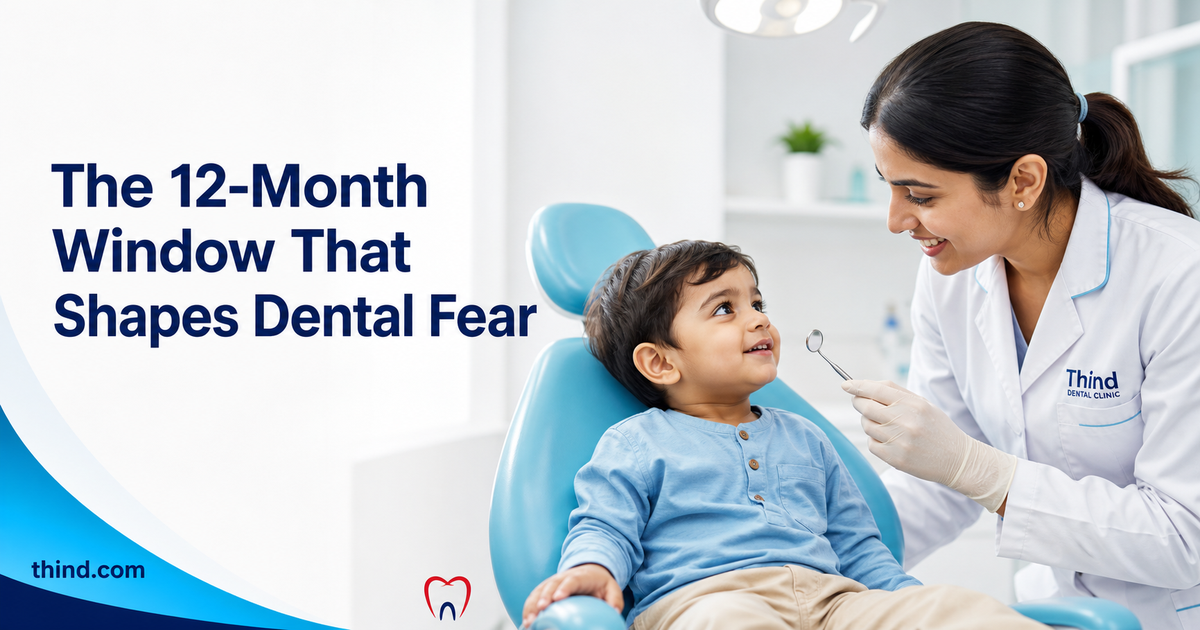
For most healthy babies without an urgent problem, the first visit is brief and preventive. The goal is to examine, guide, and build familiarity.
- The dentist reviews medical history, feeding patterns, brushing, fluoride exposure, and any concerns about teething or oral habits.
- The child’s mouth is examined for tooth development, early decay, gum health, bite development, and soft-tissue concerns.
- Parents are shown how to brush small teeth safely and how much fluoridated toothpaste to use for the child’s age.
- The family receives practical advice about frequent sugar exposure, bedtime bottles, snacks, and drinks.
- The dentist assesses the child’s cavity risk and recommends an individual recall interval rather than assuming every child needs the same schedule.
- The child gets a calm introduction to the dental environment without unnecessary treatment.
A first visit may happen with the child sitting on a parent’s lap. Crying does not mean the appointment failed; infants often cry when unfamiliar people examine them. A successful visit is one in which the examination is safe, the parent receives useful guidance, and the child leaves without being shamed or restrained unnecessarily.
How Can Parents Prepare Without Passing On Anxiety?
Parents have more influence than they may realize. A randomized trial found that pre-appointment counseling for parents reduced dental fear and anxiety in both parents and children. The preparation does not need to be complicated.
- Use neutral, simple language. Say, “The dentist will count and clean your teeth,” instead of describing drilling, injections, or your own bad experiences.
- Avoid promises you cannot control. Replace “It will not hurt” with “The dentist will explain each step, and you can tell us how you feel.”
- Choose a good time of day. For younger children, schedule when they are usually rested and fed rather than near nap time.
- Keep the buildup short. Tell a young child about the visit close enough to the appointment that they do not spend days imagining it.
- Let the dental team lead. A calm parent is reassuring, but answering every question for the child or repeatedly warning them to behave can increase tension.
- Praise specific cooperation. Afterward, mention something concrete the child managed well, such as opening their mouth or sitting in the chair.
What If Your Child Is Already Afraid?
Fear is treatable. The goal is not to force a child through every procedure in one visit; it is to match the plan to the child’s needs and the urgency of the dental problem.
For a child with no urgent pain, the dentist may begin with a short familiarization visit, use tell-show-do communication, offer choices that do not affect safety, or introduce instruments gradually. Distraction, positive reinforcement, and age-appropriate explanations may help. If treatment is urgent or extensive, the dentist should discuss suitable behavior-guidance and pain-control options with the parent, including benefits, limitations, and alternatives.
Do not delay care indefinitely because a child is afraid. Untreated decay can turn a manageable appointment into the painful emergency the family was trying to avoid. Seek prompt dental care for swelling, facial injury, persistent tooth pain, fever with a dental problem, or difficulty eating or sleeping.
How Should You Choose a Child-Friendly Dental Clinic?
A child-friendly clinic is not defined only by colorful walls. Look for a team whose systems protect comfort, trust, and long-term prevention.
- The dentist welcomes preventive visits before pain begins.
- Parents receive clear guidance about brushing, fluoride, diet, and cavity risk.
- The team explains procedures in age-appropriate language and adapts to the child’s temperament.
- Pain control and behavior-guidance choices are discussed rather than imposed.
- Hygiene and sterilization standards are documented and easy to explain.
- Treatment recommendations, alternatives, and costs are given clearly before care begins.
- The same clinical team can follow the child over time so every visit builds on the last one.
Where Can Families Start Preventive Dental Care in Ludhiana?
Thind Dental Clinic provides family dental care across three Ludhiana locations, with digital diagnostics, preventive guidance, and continuity from the same dentist-led team. Parents can begin with a child-friendly assessment before there is pain, giving the dentist time to review tooth development, cavity risk, home care, and any habits that may affect the child’s smile.
If your child’s first tooth has appeared, or the first birthday is approaching, the next step can be a simple preventive visit rather than a treatment appointment. You can contact Thind Dental Clinic to arrange an assessment at the most convenient Ludhiana location.
Frequently Asked Questions
Should a child really see a dentist by age one?
Yes. Pediatric dental guidance recommends establishing a dental home within six months of the first tooth erupting and no later than 12 months of age. The purpose is prevention, risk assessment, and parent guidance, not automatically performing treatment.
What if my one-year-old cries during the examination?
Crying is common at this age and does not by itself create dental fear or mean the visit failed. What matters is that the examination is gentle, safe, brief, and free from shame, and that the parent leaves with a clear prevention plan.
Can parents cause dental anxiety?
Parents are not the only cause, but children can pick up anxiety through language, expressions, and stories. Calm, honest preparation helps. Avoid sharing frightening dental experiences or promising that a child will feel absolutely nothing.
Can a bad first visit be repaired?
Yes. Research suggests that repeated later visits can reduce the lasting effect of a problematic first experience. Tell the new dentist what happened, ask for a gradual plan, and avoid waiting for another painful emergency.
How often should a child return after the first visit?
The interval should be based on the child’s individual cavity risk, development, and needs. Many children are reviewed every six months, while higher-risk children may need more frequent preventive care. Follow the schedule recommended after the dentist examines your child.
Sources
- American Academy of Pediatric Dentistry, Policy on the Dental Home
- American Academy of Pediatric Dentistry, Policy on Early Childhood Caries
- American Academy of Pediatric Dentistry, Behavior Guidance for the Pediatric Dental Patient
- Carrillo-Diaz et al., How Can We Reduce Dental Fear in Children? The Importance of the First Dental Visit
- Rantavuori et al., Relationship Between Children’s First Dental Visit and Their Dental Anxiety
- Ramesh et al., Preappointment Parental Counseling and Dental Fear in Children