Published: 3 October 2026 | Last updated: 3 October 2026
Dr. Rajanbir Singh Thind, Thind Dental Clinic
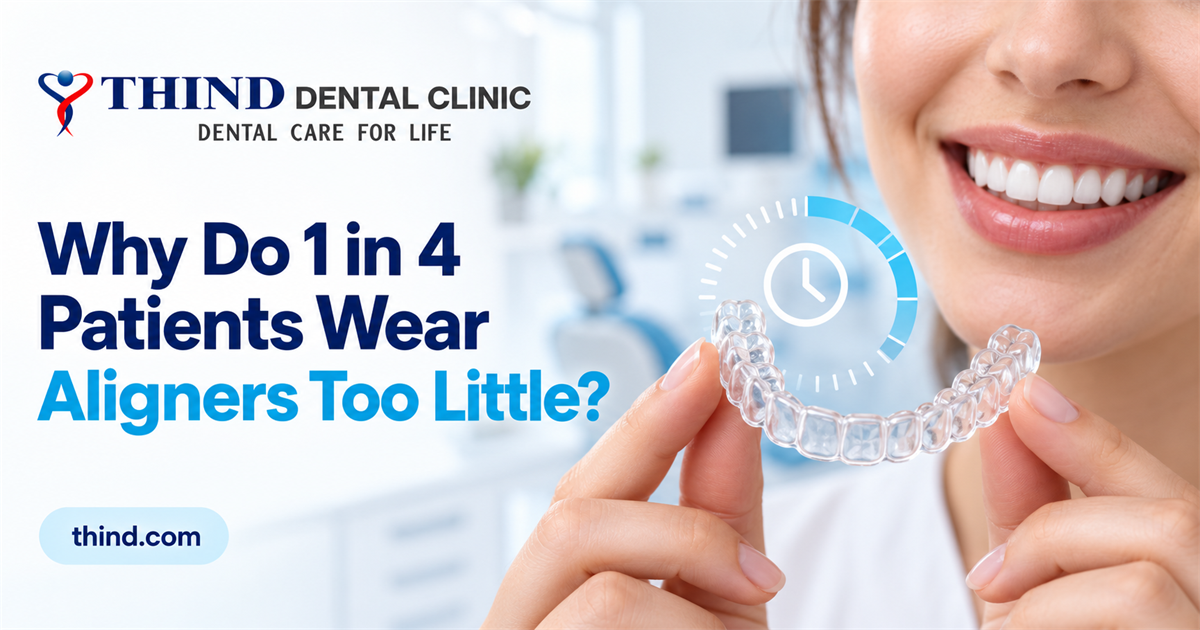
Clear aligners can only move your teeth while they are in your mouth. In a 2022 study of 7,385 aligner patients, 24.47% wore too few of their trays for the prescribed time before the clinic added digital reminders.
That is nearly one patient in four paying for treatment and then slowing it down without noticing.
How many hours a day should you wear clear aligners?
Wear your clear aligners about 20 to 22 hours a day, every day, because the trays only work while they are in place. The American Association of Orthodontists advises 20 to 22 hours daily, or as your orthodontist prescribes. In the 2022 Scientific Reports study of 7,385 patients, 24.47% had poor compliance before reminders were introduced, and 9.32% after. As of October 2026, the simplest fix is a daily routine, a reminder system and a dentist who checks your progress at every visit.
What are clear aligners, and what does "wearing them consistently" mean?
Clear aligners are a series of custom-made, transparent plastic trays that gradually move teeth into a straighter position. Each tray is worn for a set period, then replaced by the next one in the series.
Consistent wear means keeping each tray in for the prescribed daily hours, taking it out only to eat, drink anything other than water, and clean your teeth. Aligners belong to orthodontics, the branch of dentistry that corrects tooth and bite alignment, and they are an alternative to fixed metal braces.
How many aligner patients do not wear their trays enough?
A meaningful minority do not. In a 2022 study in Scientific Reports by Timm and colleagues, 24.47% of patients before the intervention showed poor compliance, meaning they wore at least 22 hours a day on fewer than half of their aligners.
After the clinic introduced electronic reminders and feedback, poor compliance fell to 9.32%. The authors concluded that "E-reminders and e-feedback were effective for increasing compliance in CAT patients."
Why do patients overestimate how much they wear their aligners?
Because people judge wear time by feel, not by measurement, and feel is unreliable. A 2017 systematic review and meta-analysis in the American Journal of Orthodontics and Dentofacial Orthopedics by Al-Moghrabi and colleagues covered 24 studies of removable orthodontic appliances. It found a mean gap of 5.02 hours per day between self-reported and objectively measured headgear wear.
The authors concluded that "Compliance with removable orthodontic appliances and adjuncts is suboptimal, and patients routinely overestimate duration of wear." That review looked at removable appliances in general and was strongest for headgear, so treat it as a warning about human memory rather than an aligner-specific number.
What does inconsistent wear cost you in time and results?
It costs you treatment time and a predictable result. Aligners move teeth through steady, repeated pressure, so long gaps in wear mean the tooth has less opportunity to follow the plan before the next tray arrives.
The data above shows how easy it is to drift: nearly 1 in 4 patients fell into poor compliance when nothing prompted them. That is why the habits around the trays matter as much as the trays themselves.
| Source and year | What was measured | What was found |
|---|---|---|
| Timm and colleagues, Scientific Reports, 2022 | 7,385 aligner patients, before and after e-reminders | Poor compliance fell from 24.47% to 9.32% |
| Al-Moghrabi and colleagues, AJODO, 2017 | 24 studies of removable appliances | Patients overestimated wear by about 5.02 hours a day (headgear data) |
| American Association of Orthodontists | Daily aligner wear advice | 20 to 22 hours per day, or as prescribed |
Are aligners comfortable enough to wear all day?
Yes, for most patients they are more comfortable than fixed braces, which makes consistent wear easier. A 2026 systematic review and meta-analysis in BDJ Open by Kaur and colleagues pooled 32 studies (28 in the meta-analysis) and found that clear aligner patients reported less pain than fixed-appliance patients (SMD = -0.419, p < 0.001), with the biggest benefit early in treatment.
The same review found lower plaque index scores with aligners (MD = -0.437, 95% CI -0.507 to -0.367). Better comfort and easier cleaning remove two common reasons people leave trays in the case.
How should a smart patient choose an aligner provider?
Choose the provider who makes consistent wear easy to achieve, not the one with the cheapest tray. Four criteria matter most for a busy professional.
- Digital planning and scans: a 3D plan shows the movement each tray is supposed to make, so you can see why wear time matters.
- Scheduled progress checks: reminders and review visits catch drift early, which the 2022 data suggests is the main lever.
- Hygiene you can verify: accredited sterilization standards (such as NABH) protect you during scans, attachments and refinements.
- A named, experienced team: the same dentists at every visit notice small changes that a rotating roster misses.
What should you look for before you start aligners?
Look for a clinic that treats wear time as part of the treatment plan, not as your private responsibility. Use this checklist before you commit.
- A clinic that explains the daily hours in writing and shows you the plan on a screen.
- A dentist who books regular check-ins and reminds you between visits.
- Laser and digital technology that keeps visits short, so appointments fit a working day.
- More than one location, so a missed visit does not become a missed month.
- A husband-and-wife dentist team with general and cosmetic experience, so gum health, whitening and alignment are planned together.
Where can you get a clear aligner plan built around your routine in Ludhiana?
Thind Dental Clinic is an NABH-approved clinic with three locations in Ludhiana, led by Dr. Rajanbir Singh Thind and Dr. Gurinder Kaur Thind. We offer clear aligners and orthodontics alongside teeth whitening, laser dentistry and smile makeovers.
Our approach matches the checklist above: a digital plan, written wear-time guidance and regular reviews.
What is the next step?
If you are thinking about straightening your teeth, start by learning whether aligners suit your bite. You can book a free smile assessment and consultation at thind.com, where we will review your teeth, explain the daily routine in plain language and answer your questions about timing and cost. If you already wear aligners and feel unsure about your progress, request a progress review with our team.
Frequently asked questions
Can I take my aligners out for a few hours for a meeting or event?
Short removals for meals, cleaning and an occasional event are normal. The goal is to reach the daily hours your orthodontist prescribes, which the AAO puts at 20 to 22 hours. If you have a long day without trays, tell your dentist so the plan can be adjusted.
What happens if I forget to wear my aligners for a few days?
Your teeth may not follow the planned movement, and the next tray may fit poorly. Contact your dentist before moving on to the next tray. They can advise whether to repeat the current one.
Do reminders really help people wear aligners more?
They did in the 2022 Scientific Reports study of 7,385 patients. Poor compliance dropped from 24.47% to 9.32% after electronic reminders and feedback were introduced. A phone alarm and a scheduled check-in are a simple version of the same idea.
Are clear aligners less painful than metal braces?
On average, yes. A 2026 meta-analysis in BDJ Open found lower pain scores with clear aligners, especially early in treatment. Individual experience varies, and complex bites may still need fixed braces.
How do I know if I am wearing my aligners enough?
Do not rely on memory alone. A 2017 review found patients overestimated wear of removable appliances by about 5 hours a day on average in headgear studies. Ask your dentist about tracking, and compare how each new tray fits.
Sources
- Timm, Farrag, Wolf, Baxmann, Schwendicke. Effect of electronic reminders on patients' compliance during clear aligner treatment: an interrupted time series study. Scientific Reports, 2022 (DOI 10.1038/s41598-022-20820-5)
- Al-Moghrabi, Salazar, Pandis, Fleming. Compliance with removable orthodontic appliances and adjuncts: A systematic review and meta-analysis. American Journal of Orthodontics and Dentofacial Orthopedics, 2017 (DOI 10.1016/j.ajodo.2017.03.019)
- Kaur, Quadri, Saini, Alarcón-Sánchez, Heboyan. Comparative impact of clear aligners versus fixed orthodontic appliances on periodontal health, pain, and quality of life: a systematic review and meta-analysis. BDJ Open, 2026 (DOI 10.1038/s41405-026-00450-z)
- American Association of Orthodontists. Clear Aligner Therapy: The Discreet Way to Straighten Teeth