Published: 2 October 2026 | Last updated: 2 October 2026
By Dr. Rajanbir Singh Thind, Thind Dental Clinic
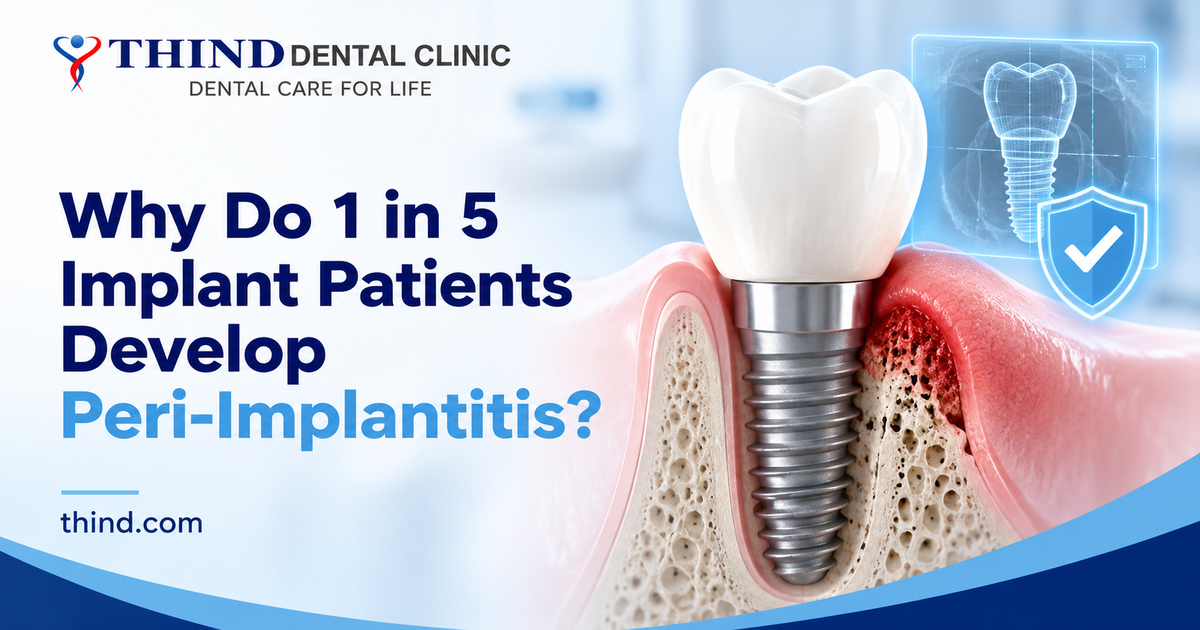
A dental implant can be placed perfectly and still run into trouble years later. A 2025 pooled analysis found that 21% of implant patients had peri-implantitis, a destructive infection of the bone around the implant.
That number surprises most people who assume an implant is a permanent, maintenance-free tooth. The good news is that the biggest risk factors are known, and a smart patient can choose a solution that lowers them.
What is the short answer on choosing an implant solution that lasts?
Choose an implant-supported solution that is planned from a digital scan, placed in a clinic with verified sterilization standards by an experienced team, and followed up with a fixed maintenance schedule. A 2025 systematic review in the Journal of Periodontology found peri-implantitis in 21% of implant patients, so aftercare matters as much as the surgery itself. Before you agree to treatment, ask for a written plan in rupees, the reasoning behind your implant type, and the recall visits that will protect it for years.
What is an implant-supported solution?
An implant-supported solution is a replacement for one or more missing teeth that is anchored to titanium posts placed in the jawbone, instead of resting on neighbouring teeth or gums. A dental implant is the post itself, and it holds a crown, a bridge, or a denture.
The post works because of osseointegration, the process in which bone grows tightly against the titanium surface. The visible tooth or teeth on top form the dental prosthesis.
How common are problems around dental implants?
Problems around implants are common: 46% of patients have peri-implant mucositis and 21% have peri-implantitis. These figures come from a 2025 systematic review and meta-analysis in the Journal of Periodontology (PubMed), which reported pooled patient-level prevalence.
The same review reported that, within 20 years of function, the incidence of mucositis and peri-implantitis reached 53% and 22% respectively. Mucositis is reversible inflammation of the gum around an implant. Peri-implantitis goes further and destroys supporting bone.
| Condition | What it means | Pooled prevalence (2025) | Incidence within 20 years |
|---|---|---|---|
| Peri-implant mucositis | Inflamed gum around the implant, no bone loss | 46% | 53% |
| Peri-implantitis | Inflammation with progressive bone loss around the implant | 21% | 22% |
How long do dental implants really last?
Most implants last a very long time, but not all of them. A 2024 meta-analysis in Clinical Oral Investigations (PubMed) of eight studies and 1,677 implants found 20-year survival between 78% and 92% depending on the analysis, and the authors summarize it as roughly 4 in 5 implants.
That is a strong result for a replacement tooth, and it also means that about 1 in 5 implants does not reach the two-decade mark. What happens in the first years, and how well the implant is cared for, decides which group you fall into.
Does the way an implant is placed change the odds of failure?
Yes. In a 2021 systematic review and meta-analysis in BDJ Open (DOI), implant failure was 2.25% with guided surgery and 6.42% with free-hand placement.
Guided surgery uses a 3D scan and a surgical template to place the implant where the plan says it should go. The pooled analysis included only four studies, so it points in a direction rather than settling the question, but it supports asking how your implant position will be planned.
Why do implants develop infections years after surgery?
Infection around implants usually builds slowly from plaque, gum disease history, smoking, and missed checkups. The 2025 Journal of Periodontology review identified periodontitis and smoking as risk indicators for both mucositis and peri-implantitis, with diabetes and alcohol consumption linked to peri-implantitis.
The European Federation of Periodontology advises that peri-implantitis can develop two to three years after placement, recommends annual radiographs to catch early bone loss, and says regular appointments are essential. Patients with a history of gum disease need closer monitoring.
Why does replacing teeth properly matter so much?
Complete tooth loss is more common than most adults expect. The World Health Organization oral health fact sheet (March 2025) states that "the estimated global average prevalence of complete tooth loss is almost 7% among people aged 20 years or older."
When a tooth is missing, chewing efficiency, neighbouring teeth, and jawbone all pay a price over time. That is why choosing the right replacement, not just the quickest one, deserves real thought. Where a tooth can still be saved, root canal treatment is usually worth discussing first.
How should a smart patient think about choosing implant care?
Judge the whole care pathway, not only the surgery price. The data above shows that long-term results depend on planning, hygiene, and follow-up, so the best choice is a clinic that is strong on all three.
- Verified hygiene. Infection control should be audited and documented, not assumed from a clean waiting room.
- Scan-based planning. Your implant position should be planned on digital imaging before any surgery begins.
- Continuity of care. The same experienced team should place the implant and monitor it, ideally with convenient locations for recall visits.
- Honest, written costs. You should receive an itemized estimate in rupees, inclusive of GST, before you commit.
| Option | What it replaces | Question to ask your dentist |
|---|---|---|
| Single implant with crown | One missing tooth | Is there enough bone, and how will the position be planned? |
| Implant-supported bridge | Two or more adjacent missing teeth | How many implants are needed, and how will I clean under the bridge? |
| Implant-supported denture | Most or all teeth in an arch | How often will it need adjustment and professional maintenance? |
What should you look for before you say yes to an implant?
Look for a clinic that can answer six practical questions clearly and in writing. If a clinic cannot, keep looking.
- Look for a clinic that is NABH-approved or can show its sterilization protocol step by step.
- Look for a clinic that scans your jaw digitally and shows you the images and the plan before treatment.
- Look for a dentist who reviews your gum health first, because gum disease history raises risk.
- Look for a team that schedules recall visits and periodic X-rays after the implant is in place.
- Look for clinic locations close enough to your home or office that follow-up visits are easy to keep.
- Look for an itemized estimate in rupees that lists each stage, so there are no surprises.
Where can you find implant care built around these standards in Ludhiana?
Thind Dental Clinic is a NABH-approved clinic with three locations in Ludhiana, run by Dr. Rajanbir Singh Thind and Dr. Gurinder Kaur Thind. Our dental implant and tooth replacement care follows the pathway described above: scan-based planning, documented hygiene, and follow-up after treatment.
If you are unsure which implant-supported option suits your mouth, a consultation at thind.com is a sensible first step.
How do you take the next step?
You do not need to decide on treatment to learn where you stand. You can book a free smile assessment and consultation, ask every question on the checklist above, and leave with a clear picture of your options and an estimate in rupees.
Frequently asked questions
How long do dental implants last?
Many last decades. A 2024 meta-analysis of eight long-term studies found 20-year survival between 78% and 92%, roughly 4 in 5 implants. Regular maintenance visits help protect that result.
What is peri-implantitis?
Peri-implantitis is inflammation around an implant that causes progressive loss of the supporting bone. A 2025 pooled analysis found it in 21% of implant patients. Early treatment is far easier than late treatment.
What are the warning signs of a problem around an implant?
Bleeding, swelling, redness, or tenderness around an implant are signs of inflammation. The European Federation of Periodontology advises consulting your dentist promptly if you notice them between scheduled visits.
Does smoking affect dental implants?
Yes. The 2025 Journal of Periodontology review identified smoking as a risk indicator for both peri-implant mucositis and peri-implantitis. Quitting or cutting down improves your odds.
Do I need follow-up visits after my implant is placed?
Yes. The European Federation of Periodontology says regular appointments are essential and recommends annual radiographs to detect early bone loss. Your dentist may set a closer schedule if you have had gum disease.
Sources
- Galarraga-Vinueza ME, et al. Prevalence, incidence, and risk factors and indicators for peri-implant diseases: a systematic review and meta-analysis. Journal of Periodontology, 2025 (PubMed PMID 40489307)
- Kupka et al. How far can we go? A 20-year meta-analysis of dental implant survival rates. Clinical Oral Investigations, 2024 (PubMed PMID 39305362)
- Abdelhay N, Prasad S, Gibson MP. Failure rates associated with guided versus non-guided dental implant placement: a systematic review and meta-analysis. BDJ Open, 2021 (DOI)
- World Health Organization. Oral health fact sheet, March 2025
- European Federation of Periodontology. Peri-implant disease: prevention (patient guidance)